Introduction to Industrial Clad Metals: What They Are and Where They Are Used
Article • September 18th, 2026 • Jackie LeBeauRSC is pleased to announce the acquisition of Vincent Metals Corporation, expanding our capabilities with clad metal products. Learn what industrial clad metals are, how the cold roll bonding process works, and the wide range of applications — from electronic components, medical devices, automotive connections, instrumentation, and jewelry — served by overlay clad metals.
What is metal cladding?
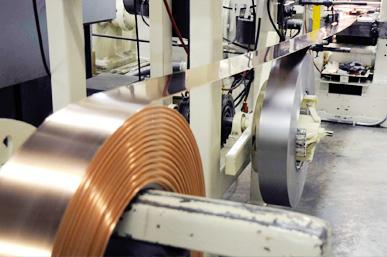
Metal cladding is a cold process that permanently bonds one metal to another, or several metals together, to achieve a specific combination of properties unattainable with any single metal. The process joins metals through intense pressure, without brazing alloys or adhesives, creating a metallurgical bond at the atomic level. The result is a composite structure where separate metals share a common bonded interface with a unified electron surface. Cladding is typically performed as a continuous roll bonding process, combining two or more strips of metal in a single operation.
What is an overlay clad metal?
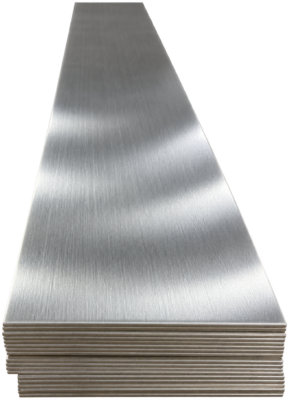
An overlay clad metal is a composite in which one or more metals are bonded across the full surface of a base metal strip using extreme pressure with no adhesives or fillers. The overlay layer delivers specific properties — conductivity, corrosion resistance, reflectivity, biocompatibility, surface appearance — while the base metal provides structural integrity, thermal performance, or cost efficiency.
Why choose a clad metal over a single material?
Cladding is fundamentally about customization. When a single metal cannot deliver all the properties a design requires – whether that’s electrical conductivity, corrosion resistance, surface appearance, thermal performance, strength, or cost efficiency – cladding allows you to engineer a composite that does.
A metallurgist or materials engineer can help identify the right metal combinations for your application goals. Common drivers include: reducing material cost by limiting precious metal use to only the surface area where it’s needed; extending service life through corrosion or wear-resistant outer layers; enabling designs that would require more parts or more complex processing with a single material; and meeting compatibility requirements where dissimilar metals must interface.
Where are clad metals used?
Clad metals appear across a remarkably wide range of industries and everyday products. Common examples include sterling silver overlaid onto nickel silver alloy for jewelry and decorative applications, platinum overlaid onto niobium for electroplating anodes, and copper overlaid onto steel for cookware and plumbing fixtures.
Platinum Clad Niobium
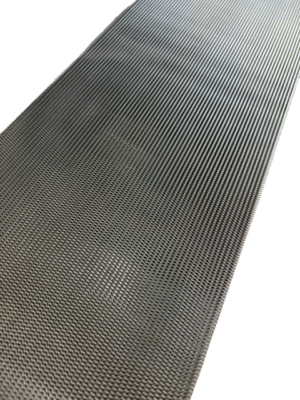
Platinum clad niobium is a flagship product and one of the most demanding applications in the clad metals industry. These products combine the electrochemical stability and corrosion resistance of platinum with the structural strength and light weight of niobium, resulting in a capability to withstand highly corrosive plating environments.
- Used in electroplating for enhanced corrosion resistance.
- Ideal for applications requiring high-temperature stability.
- Common in the aerospace industry for lightweight components.
- Utilized in medical devices for biocompatibility and durability.
- Employed in electronics for improved conductivity and performance.
- Serves in chemical processing equipment due to its inert properties.
Decorative and Jewelry Applications
Silver-filled is one of the most widely recognized overlay clad products. It consists of sterling silver bonded to a copper-zinc-nickel alloy. Silver-filled is used in the manufacturing of jewelry, belt buckles, horse bridle hardware, and other decorative goods. It is typically supplied in blanks or coil form.
Coinage, Medals, and Awards
Clad metals are widely used in the production of coins, commemorative medals, and awards, where a precious or decorative metal surface is bonded to a less expensive base — delivering the appearance and feel of a solid precious metal product at a fraction of the material cost.
Electronic Components and Power Distribution
Custom overlay clad metals serve a broad range of electronic and electrical applications, including stamped contact parts, connector components, and power distribution elements. In these applications, precise specifications — alloy selection, layer ratios, dimensional tolerances, temper, and surface condition — are critical to performance.
How Clad Metals Are Made: The Cold Roll Bonding Process
RSC produces clad metals through cold roll bonding — a solid-state process that joins dissimilar metals at the atomic level without heat, solder, adhesives, or brazing alloys. Here’s how it works:
- Surface preparation is the critical first step. The metals to be bonded must be completely clean and free of any oils, grease, dirt, or surface contaminants. Any contamination at the interface will prevent bonding.
- Roll bonding passes the prepared metal strips together through a rolling mill under extreme pressure, achieving approximately 65% reduction in cross-section in a single pass. This intense compression creates what is called a “green bond” — an initial mechanical interlocking of the two metal surfaces at the interface.
- Sintering finalizes the bond through a controlled heating cycle. The heat drives diffusion across the interface, creating a true metallurgical bond between the layers at the atomic level and recrystallizing the grain structure of the outer clad layers. After sintering, the composite strip is structurally unified and can be further processed — rolled, annealed, slit, and leveled — just like any other metal strip product.
The result is a permanent, high-integrity bond that cannot be separated without destroying the material.

Cladding Service Specifications
| Specification | Details |
| Cladding Process | Cleaning; Cold Bonding; Green Bond Formation; Annealing; Rolling; Slitting; Tension Leveling |
| Pre-Cladding Operations | Brush Cleaning |
| Special Cladding Operations | Overlays |
| Bonding Mill | 6 in. Diameter Working Rolls; 18 in. Back-Up Rolls |
| Layers | 2–5 |
| Reduction of Area | 50%–70% |
| Cladding Materials & Base Metals |
Aluminum Platinum |
| Thickness | 0.005″ up to 0.110″ |
| Length | Continuous Coils Discrete Length |
| Width | 0.125″ to 7″ |
| Coil Weight | 10 lbs to 500 lbs |
| Testing / Quality | Dimensional Inspection Stretch-Off Metering Mechanical Properties Metallography Testing Full-Time Metallurgist on Staff |
| Tolerance (+/-) | We Hold Tighter Than ASTM Requirements |
| Additional Services |
Consulting Skiving |
| Lead Time | 7–8 Weeks Rush/Emergency Services Available Material Availability |